
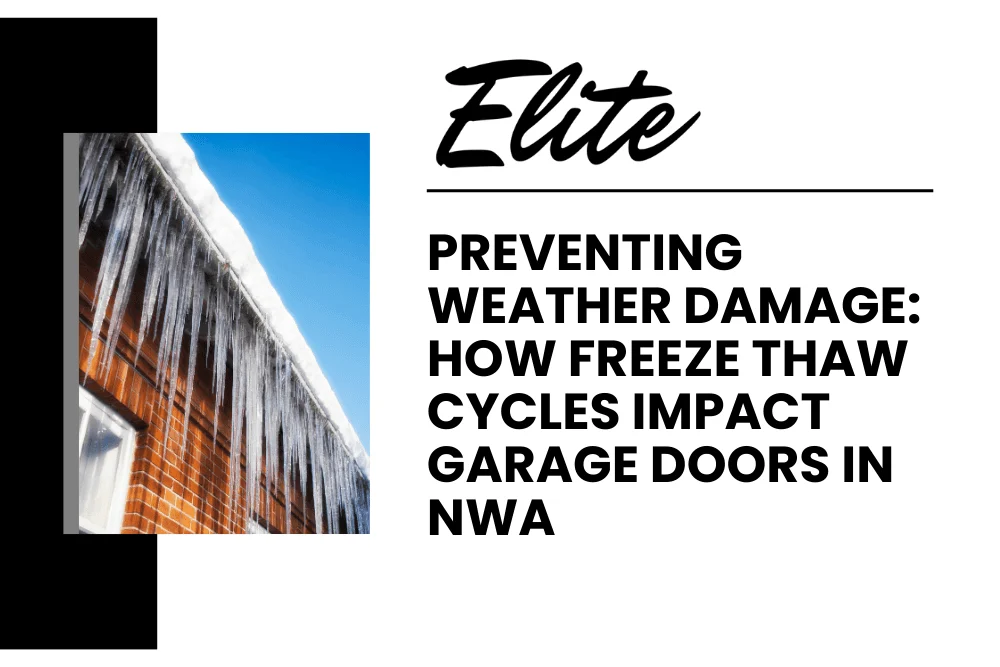
Preventing Weather Damage: How Freeze Thaw Cycles Impact Garage Doors in NWA
Table of Contents
Why Winter Temperature Swings Are Hard on Garage Doors in Northwest Arkansas
Homeowners across Northwest Arkansas feel the effects of winter garage door damage each year, especially when temperatures bounce between freezing nights and mild afternoons. These shifts may seem harmless, but the freeze thaw pattern puts stress on springs, tracks, rollers, and even the door itself. At Elite Garage Door Services of Northwest Arkansas, we see how this cycle can create sudden issues that leave families stuck at home or unable to secure their property. Understanding why it happens helps homeowners stay ahead of trouble before a cold snap turns into an expensive repair.
How Winter Garage Door Damage Begins With the Freeze Thaw Cycle
Winter garage door damage often starts quietly, usually long before a homeowner notices that something feels off with how the door moves. The freeze thaw cycle creates a unique challenge in NWA because temperatures can rise above freezing during the day but drop sharply at night. That daily expansion and contraction puts mechanical stress on every moving part. It affects metal components like springs and hinges, but it also influences wood and composite doors that absorb moisture during winter humidity. Homeowners in Bentonville, Rogers, Fayetteville, and Springdale feel these issues every year because local weather swings are sharper than many expect.
One of the first areas affected is the track system. When metal contracts, it can slightly shift alignment, leading the door to rub or bind. If the problem continues, it may feel like the door is sticking or resisting movement. This is often the moment many people call for garage door repair, especially when the issue becomes too risky to ignore. Elite Garage Door Services of Northwest Arkansas sees these symptoms frequently as the season begins. It is important to recognize that what seems like a minor annoyance is usually the earliest sign of cold weather stress.
Why Moisture Plays Such a Big Role in Winter Garage Door Damage
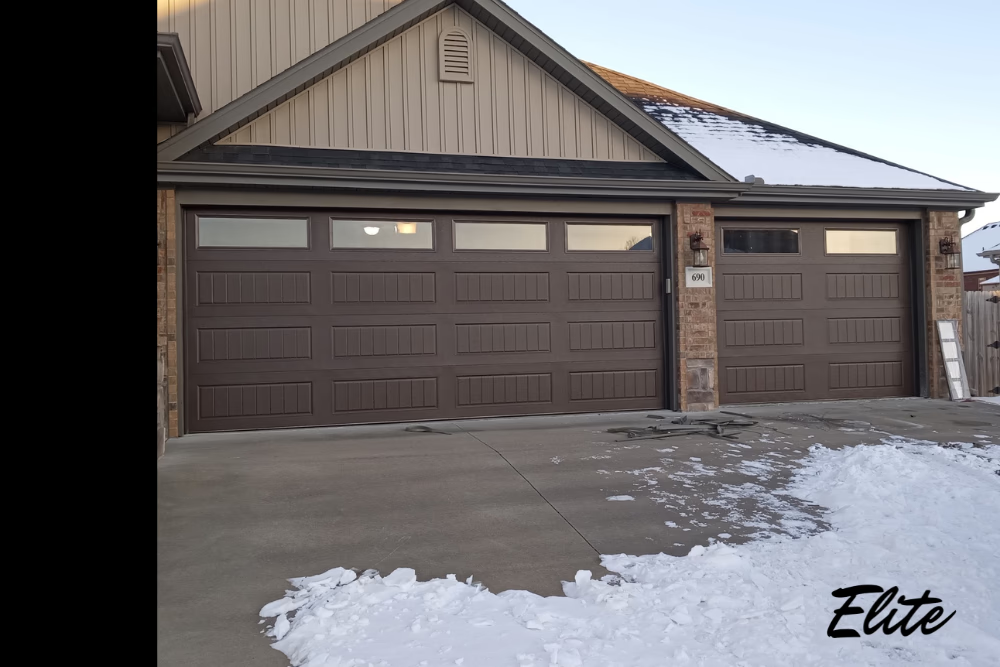
Moisture is one of the biggest culprits behind winter garage door damage because it interacts directly with the freeze thaw cycle. Water from rain, sleet, or melting ice settles on tracks, seals, hardware, and even the panels. Overnight freezes trap that moisture, turning it into ice that forces sealed components apart or stiffens moving pieces. When the sun comes out and temperatures warm, everything thaws again. This cycle repeats day after day throughout winter in NWA.
One area that sees clear effects is the weather stripping. When repeatedly exposed to freezing moisture, the stripping becomes brittle, allowing cold air and water to enter the garage. That can increase humidity inside the space, which is a known contributor to freeze thaw garage door issues. Homeowners often notice extra condensation or a musty smell in the garage before they realize the source is the weather seal. Once that seal becomes compromised, even the thickest insulated overhead doors struggle to protect the space. That is when a homeowner may want to look at upgrading to quality overhead garage doors that hold up better to repeated seasonal changes.
During service calls, technicians also see how moisture affects wooden doors used in older Bentonville and Fayetteville homes. Wood swells when it absorbs water, which limits the door’s clearance and puts strain on the opener. When the wood later contracts during a freeze, gaps shift and panels weaken. This natural cycle is predictable but damaging if not monitored.
How Winter Garage Door Damage Affects Springs and Cables
The freeze thaw cycle also leads to winter garage door damage by stressing high-tension parts like springs and cables. These components expand and contract with temperature changes, and each cycle reduces their fatigue life. In NWA’s climate, where temperatures regularly swing thirty degrees in a single day, torsion springs take a beating. A spring already weakened by age or corrosion may break during a cold morning, creating a sudden and unsafe failure.
Cables face similar risks. Moisture freezes onto the cable surface, stiffening the strands and contributing to fraying. When cables weaken, the door may lift unevenly or sag on one side. These conditions require urgent attention because uneven weight distribution damages every part of the system. Many homeowners first notice the issue when the opener starts straining or making louder noises. That is when a technician will usually recommend garage door openers with built-in safety sensors, especially models from LiftMaster that monitor force adjustments and alert homeowners to potential problems.
Springs and cables are never safe to adjust at home. Winter conditions make them even more dangerous because ice affects tension and friction. If you suspect these parts are struggling, it is best to schedule professional help right away.
Some signs of winter stress on springs and cables include:
- A door that rises in jerky movements
- Loud popping noises during operation
- A crooked or uneven door when closing
- Frayed cables with visible rust or ice buildup
- A garage door that feels heavier when lifting manually
These are conditions technicians see often during winter in Rogers and Springdale, especially following overnight freezes.
How Winter Garage Door Damage Impacts Rollers, Hinges, and Bearings
Another area affected by winter garage door damage involves the smaller moving parts. Rollers, hinges, and bearings all require smooth, consistent movement. When cold air thickens lubricants, these parts begin to drag. Ice adds resistance. Metal contraction changes spacing. It is a combination that wears components out quickly.
In Northwest Arkansas, humidity adds an extra challenge. Light rust develops faster on cold metal, especially when moisture condenses inside the garage during warm afternoons. Over time, this leads to noisy operation and friction that spreads to the opener. Many homeowners describe the sound as grinding or scraping, which is usually a sign that rollers or hinges need attention.
A technician from Elite Garage Door Services of Northwest Arkansas often recommends regular winter lubrication using products designed for cold conditions. This small step makes a big difference in preventing cold weather garage door problems. Homeowners should avoid standard oils because they thicken quickly in freezing temperatures.
As a reference, here are some common roller and hinge problems seen during NWA winters:
- Rollers that freeze into the track
- Hinges that stiffen and pop during movement
- Bearings that squeal due to dry or thickened lubricant
- Metal fatigue that increases during sudden temperature drops
- Worn nylon rollers that crack in extreme cold
Addressing these issues early helps protect the entire system.
How Winter Garage Door Damage Affects Garage Door Openers
Garage door openers experience winter garage door damage as well, even though they are protected inside the garage. Cold temperatures affect circuit boards, sensors, and motor performance. Humidity and condensation also interfere with electrical connections, especially in older openers that lack modern weather-resistant design.
LiftMaster openers, which we install frequently across Bentonville and Fayetteville, handle cold weather better than many older models. Their sensors automatically adjust force levels and detect binding, a helpful feature when freeze thaw garage door issues cause temporary stiffness. Yet even these systems can strain if the garage door itself is not moving freely.
Homeowners may notice delays, dim lights, or intermittent errors. Sometimes the opener stops halfway and reverses because it detects resistance. If this happens more than once, it usually means the door needs inspection rather than the opener.
If your opener behaves differently during winter, watch for:
- Delayed start when pressing the remote
- Safety sensors that blink or misalign due to condensation
- A motor that sounds louder than usual
- The door reversing mid-operation
- A burning smell or overheating from working too hard
These issues often appear after repeated freeze thaw cycles.
Local Climate Factors That Increase Winter Garage Door Damage in NWA
Winter garage door damage in Northwest Arkansas is intensified by our regional weather patterns. Unlike states that stay consistently cold, NWA winters swing between warm afternoons and freezing nights. This rapid change stresses materials far more than steady temperatures would. It also creates the perfect environment for condensation and ice formation inside the garage.
Bentonville and Rogers often experience heavy overnight frost. Fayetteville sees more moisture and fog, which leads to ice buildup on metal parts. Springdale frequently deals with cold wind that dries lubricants and makes components brittle. Each of these micro-climates affects garage doors differently.
Because many NWA homes also store water heaters, freezers, and vehicles in the garage, temperature fluctuations become even more extreme inside the space. Warm appliances create moisture. Cold temperatures freeze it. As technicians, we often recommend seasonal tune-ups to help homeowners stay ahead of damage before deeper winter settles in.
What Homeowners Can Do to Reduce Winter Garage Door Damage
Preventing winter garage door damage is easier when homeowners take a few thoughtful steps at the beginning of the season. These steps help reduce stress on the door and keep small issues from turning into major failures. They also support the long-term safety of the system, which is especially important for families who frequently use the garage as a main entry. A technician may mention some of these during a routine garage door repair visit.
Regular inspection is one of the best habits. Looking at the springs, cables, rollers, and tracks can reveal early signs of corrosion or misalignment. Checking the weather seal helps prevent excess moisture from entering the garage. Maintaining proper lubrication and keeping the tracks clean also reduces strain on the opener.
At Elite Garage Door Services of Northwest Arkansas, we often remind homeowners that small adjustments early in the season prevent costly failures later. A little attention goes a long way toward protecting the system.
During the holiday season, many families take extra steps to make sure their homes stay secure while they travel. Garage doors play a big part in that, especially with the humidity, cold snaps, and storms we see across Northwest Arkansas. At Elite Garage Door Services of Northwest Arkansas, technicians regularly help homeowners prepare their doors for these winter conditions so everything stays reliable while they are away. For a closer look at local experiences and feedback from families in Bentonville, Rogers, Fayetteville, and Springdale, you can also view Elite Garage Door Services of Northwest Arkansas on Google.
Call Elite Garage Door for Trusted Garage Door Repair in Northwest Arkansas
If your home is showing signs of winter garage door damage or you are noticing new noises during cold mornings, it may be time to schedule reliable help. Protecting your system through the winter is one of the best ways to stay safe and avoid larger repairs. For supportive, technician-level guidance and dependable service, call 479.354.0088 or reach out through our contact page to keep your garage door moving smoothly all season.
Frequently Asked Questions
750+ five-star Google reviews
Testimonials and Reviews
Trusted by homeowners across Northwest Arkansas for reliable garage door repair and installation. See why our customers consistently leave five-star Google reviews for Elite Garage Door.